Dispossesions in the Americas

Dispossesions in the Americas

  • Home
  • Explore
  • About
  • Authors
  • Art
  • Bodies
  • Curricula
  • Cultural Heritage
  • Maps
  • Territories
Back to Explore
Narrative 1530 - 1718

COLONIAL LEGISLATION AS THE FRAMEWORK FOR DISPOSSESSIONS IN THE CENTRAL ANDES: THE ENCOMIENDA SYSTEM

  • Medeiros, Carmen

  • Sánchez Patzy, Radek

Published: 2024

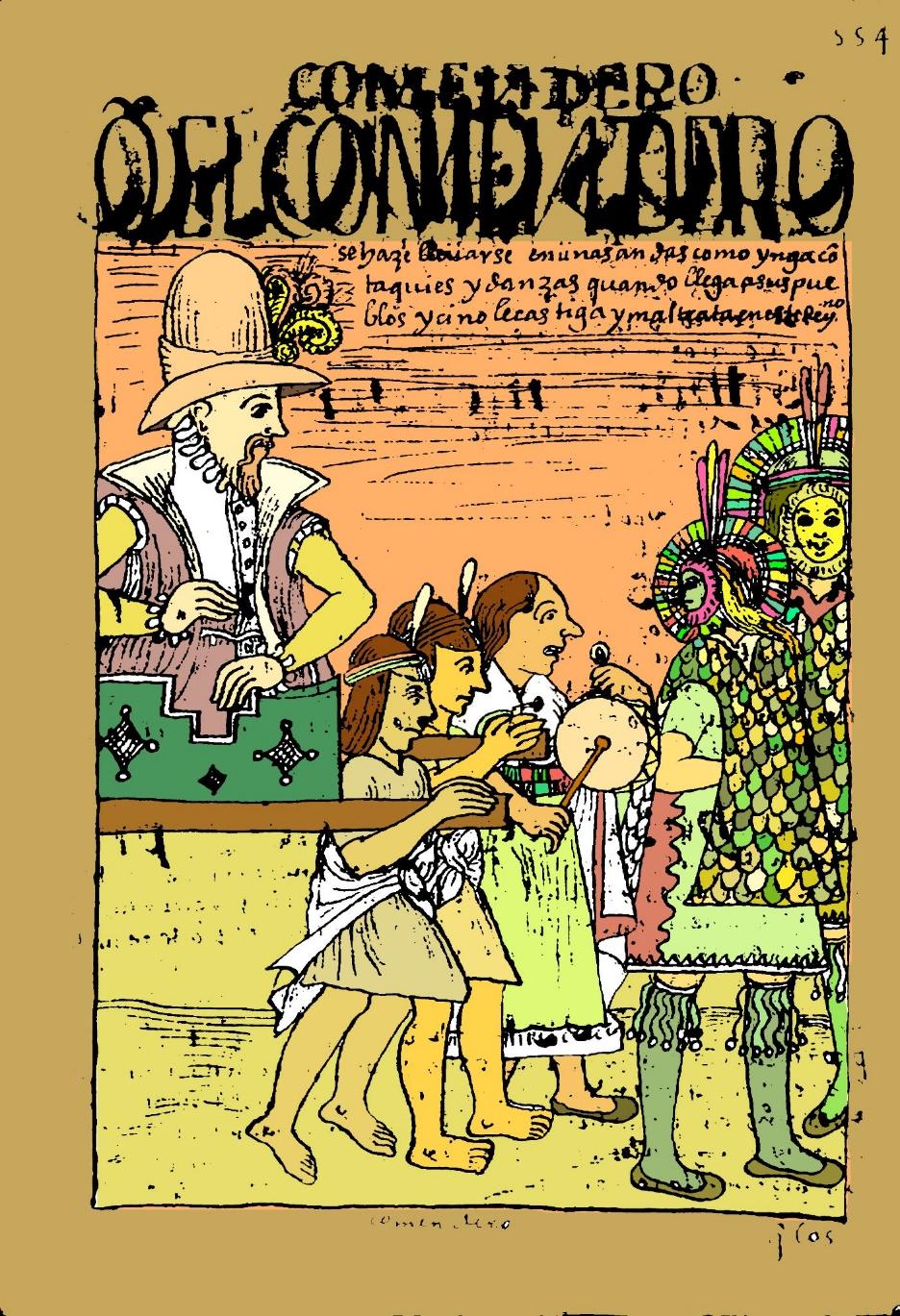
Image: 1) Guamán Poma de Ayala, “Encomendero en litera Inca, ca. 1600, Guamán Poma de Ayala.” Source: Guamán Poma de Ayala, Felipe. *New Chronicle and Good Government.* Transcription, prologue, notes and chronology by Franklin Pease, Volume 1. (Caracas: Biblioteca de Ayacucho, 1980), 242. Digitally intervened by Mauricio Sánchez Patzy.

Image: 1) Guamán Poma de Ayala, “Encomendero en litera Inca, ca. 1600, Guamán Poma de Ayala.” Source: Guamán Poma de Ayala, Felipe. New Chronicle and Good Government. Transcription, prologue, notes and chronology by Franklin Pease, Volume 1. (Caracas: Biblioteca de Ayacucho, 1980), 242. Digitally intervened by Mauricio Sánchez Patzy.

Abstract

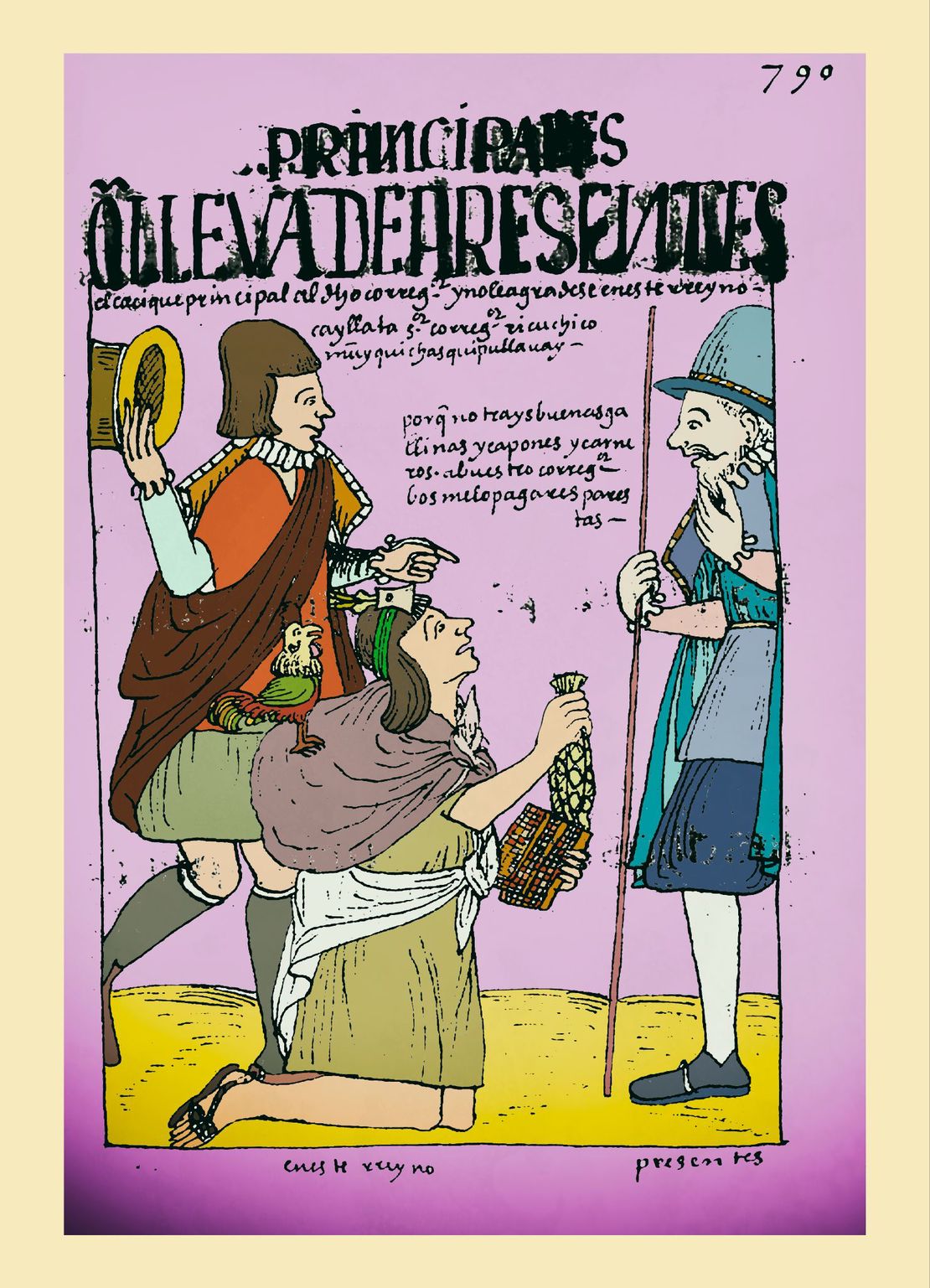
The Encomienda and the Repartimiento were the first institutions of Spanish colonization established by the conquistadors in the Americas. The Repartimiento was a way of organizing the inhabitants of a vaguely defined area into groups or population units subject to labor and tax services. The Encomienda, or repartimiento of Indians in encomienda, consisted of “encomendar” (to deliver or entrust) the Indians of a repartimiento unit to a Spanish subject (conquistador, colonizer) who thus became encomendero. As a reward for his services or military valor, he would be granted the right to receive the tribute that the Indians in his charge had to pay to the Spanish Crown. In turn, the encomendero had to guarantee the adequate indoctrination of the Indians in the Catholic faith. From its improvised implementation in the Caribbean in the early years of the conquest until its final abolition in 1718, the encomienda system underwent multiple modifications that redefined its duration, the rights and obligations of encomenderos and encomendados, as well as the specific contents of the indigenous tribute that encomenderos would receive. In the colonization of state societies, as was the case of the Tawantinsuyu, an Inca State, the encomienda presented singular features.

Throughout the 16th century, the Crown enacted a series of laws limiting the rights of the encomenderos to prevent the development of a parallel seigniorial power, and responding to the growing complaints —filed by some church representatives— of the abuses perpetrated by the encomenderos against the indigenous encomendados. Although the encomienda system took different forms according to each region´s specific characteristics, its importance declined, as a colonial state emerged and consolidated with new institutions and political structures directly controlled by the Spanish Crown.

Encomienda in the Central Andes

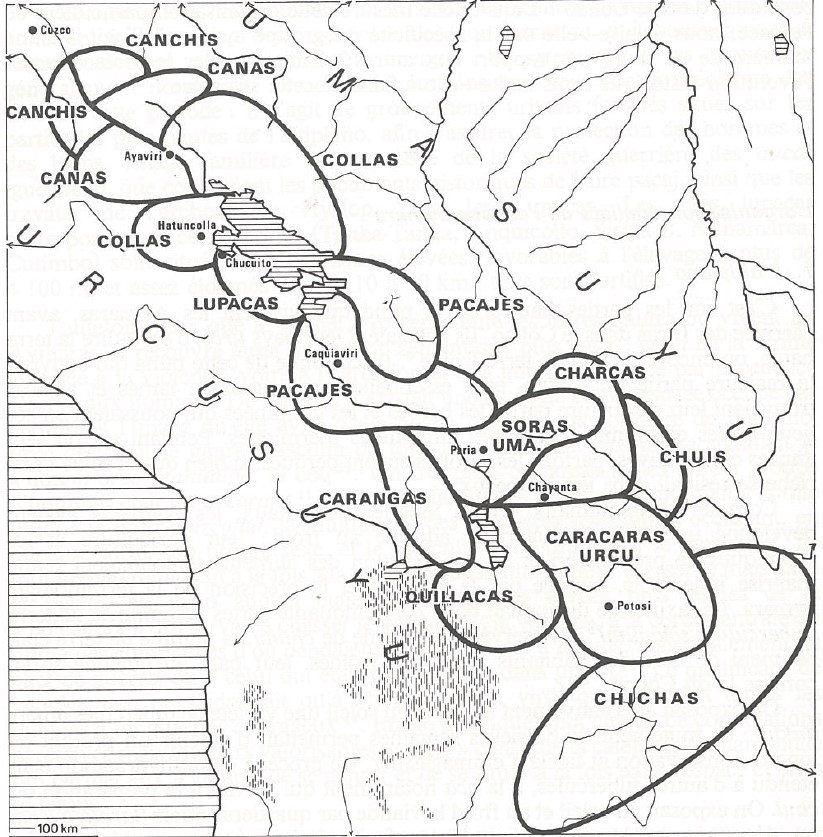
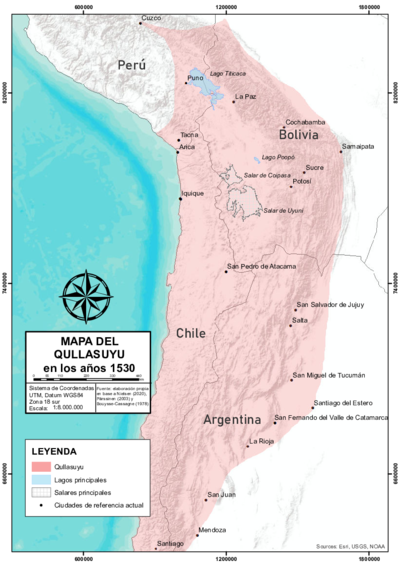
In the conquest of the Inca State, and particularly of the Aymara lordships of Qullasuyu, the encomienda system served to “organize the extraction of the surplus without altering the mechanisms by which production was structured” before the Spaniards´1 arrival. Indeed, as state societies, Andean societies not only had the capacity to produce enormous agricultural surpluses and the technology for the extraction and processing of minerals, but also possessed institutions that regulated the transfer and redistribution of surpluses. During the first 2 to 3 decades of colonization (1530´s – 1560´s), all the goods necessary for subsistence consumed by Spaniards and natives, as well as the silver that was traded and exported, were not only produced using indigenous labor and their own technologies, but also within the framework of their own relations and production system and organization.

In this context, many indigenous authorities managed to have a certain bargaining power and significant room for maneuver. Indeed, the greater or lesser difficulty in obtaining the tribute —having the indigenous labor force and appropriating the goods and services produced under the local Andean system— depended on the relationships that the encomenderos were able to establish with the indigenous authorities either through alliances and incentives or through openly violent forms of pressure to obtain their cooperation. Thus, the encomienda gradually deepened and restructured —in some regions more than others—, the socio-economic hierarchies that already existed in the Inca State, but in a more regulated and controlled manner. In this context, colonial dispossession consisted, above all, of violent processes of expropriation of the labor force and the surpluses produced by Andean societies.

In general, the encomenderos would sell on the market part of the goods received through tribute (agricultural products, clothing, utensils, etc.), perceiving a monetary income that allowed them to accumulate capital to invest in different ventures, especially mining. In other words, by converting use values into merchandise, the commercialization of tribute allowed the capitalization of the encomenderos and the development of an internal market around the silver economy of Porco and Potosí mines. Over time, the gradual integration of the indigenous population into this market led to the monetization of the tribute.

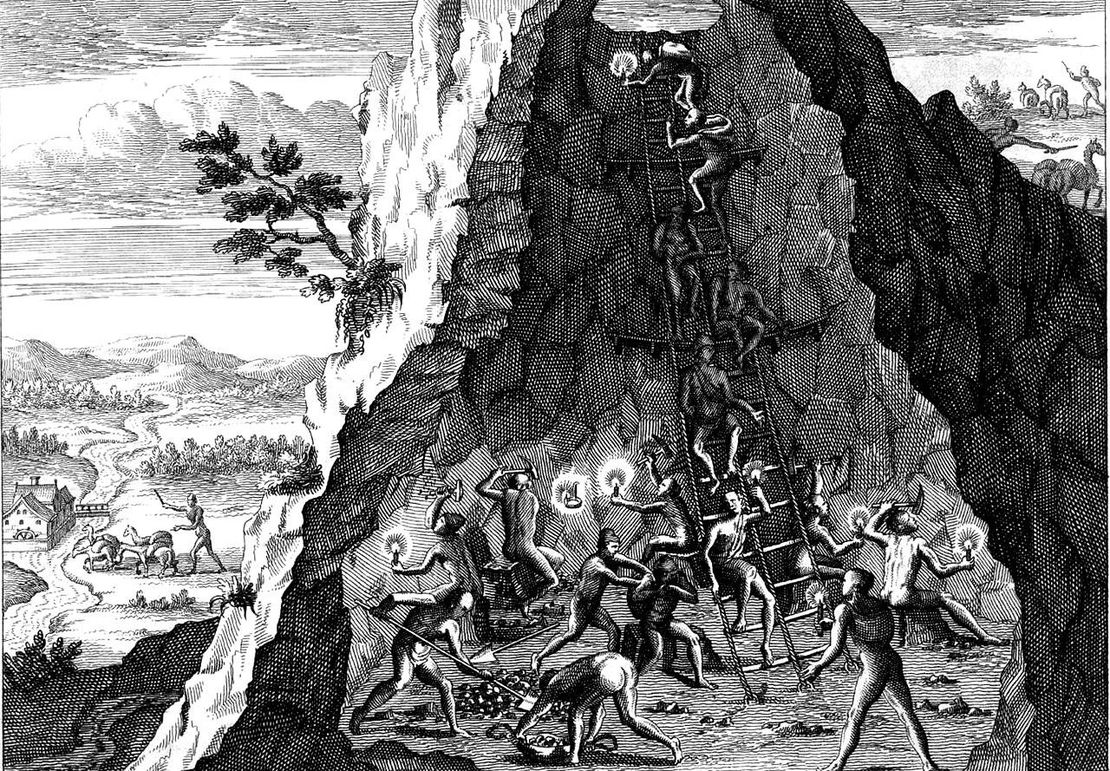
The rise of the encomienda in Qullasuyu coincided with the first silver boom/cycle (1545-1560). During this period, the first viceroys of Perú —the viceroyalty was created in 1542— tried to apply legislation aiming to the elimination of the encomienda, but had to retreat in the face of the violent reaction of the encomenderos. However, the importance and efficiency of this institution —as a mechanism of surplus extraction— began to decline in the 1560s in the context of the mining crisis (and of production in general). This crisis was due not only to the depletion of the surface mineral deposits, but also to the fact that the Andean silver production system had been exploited to the limit of its capacity. This was in turn coupled with the demographic disaster caused by the diseases arriving with the Spaniards, and with the excessive exploitation of the indigenous labor force.

This situation required the Crown to implement a set of structural reforms (economic, technological, institutional, and territorial) to rebuild the institutionality of the colonial state and develop new forms of production and surplus extraction more directly linked to the Crown. Thus, the consolidation of the colonial state —initiated with the reforms of Viceroy Toledo in the 1570s— progressively undermined the power of the encomenderos and the validity of the encomienda.

Bibliography

Assadourian, Carlos Sempat. The Colonial Economic System. Mercado Interno, Regiones y Espacio Económico. Lima: Instituto de Estudios Peruanos, 1982

————— “La Renta de la Encomienda en la Década de 1550: Piedad Cristiana y Desconstrucción.” Revista de Indias 48(1988): 109-145.

Larson, Brooke. Colonialism and Agrarian Transformation in Bolivia: Cochabamba, 1550 - 1900. Princeton, NJ: Princeton University Press. 1988.

Presta, Ana María. Encomienda, Family and Business in Colonial Charcas. Los Encomenderos de La Plata 1550 - 1600. Sucre: National Archives and Library of Bolivia. 2014

Spalding Karen. Huarochirí. An Andean Society under Inca and Spanish Rule. Stanford: Stanford University Press. 1984.

Stern, Steve. Peru’s Indian Peoples and the Challenge of Spanish Conquest. Huamanga to 1640. Madison: University of Wisconsin Press. Second edition, 1993.


  1. Karen Spalding, Huarochiri. An Andean Society under Inca and Spanish Rule (Stanford University Press, 1984), 124 (own translation). ↩︎

Citation

Medeiros, Carmen, and Radek Sánchez Patzy. 2024. 'COLONIAL LEGISLATION AS THE FRAMEWORK FOR DISPOSSESSIONS IN THE CENTRAL ANDES: THE ENCOMIENDA SYSTEM'. Dispossessions in the Americas. https://staging.dia.upenn.edu/en/content/TL001Encomienda/
Reading in Spanish

Narrative 1530 - 1718

LEGISLACIONES COLONIALES QUE ENMARCARON LOS DESPOJOS EN LOS ANDES CENTRALES: LA ENCOMIENDA

  • Medeiros, Carmen

  • Sánchez Patzy, Radek

Published: 2024

Imagen 1) Guamán Poma de Ayala, “Encomendero en litera Inca, hacia 1600, Guamán Poma de Ayala”. Fuente: Guamán Poma de Ayala, Felipe. *Nueva Crónica y Buen Gobierno.* Transcripción, prólogo, notas y cronología de Franklin Pease, Tomo 1. (Caracas: Biblioteca de Ayacucho, 1980), 242. Intervenido digitalmente por Mauricio Sánchez Patzy

Imagen 1) Guamán Poma de Ayala, “Encomendero en litera Inca, hacia 1600, Guamán Poma de Ayala”. Fuente: Guamán Poma de Ayala, Felipe. Nueva Crónica y Buen Gobierno. Transcripción, prólogo, notas y cronología de Franklin Pease, Tomo 1. (Caracas: Biblioteca de Ayacucho, 1980), 242. Intervenido digitalmente por Mauricio Sánchez Patzy

Reading in Portuguese

Narrative 1530 - 1718

LEGISLAÇÕES COLONIAIS QUE MOLDARAM AS DESAPROPRIAÇÕES NOS ANDES CENTRAIS: O SISTEMA DE ENCOMIENDA

  • Medeiros, Carmen

  • Sánchez Patzy, Radek

Published: 2024

LEGISLAÇÕES COLONIAIS QUE MOLDARAM AS DESAPROPRIAÇÕES NOS ANDES CENTRAIS: O SISTEMA DE ENCOMIENDA

Carmen Medeiros e Radek Sánchez Patzy

Imagem 1) Guamán Poma de Ayala “Encomendero en litera Inca, hacia 1600, Guamán Poma de Ayala”. Fonte: Guamán Poma de Ayala, Felipe. Nova Crônica e Bom Governo. Transcrição, prólogo, notas e cronologia de Franklin Pease, Volume 1. (Caracas: Biblioteca de Ayacucho, 1980), 242. Intervenção digital por Mauricio Sánchez Patzy

Resumo

Encomienda e Repartimiento foram as primeiras instituições da colonização espanhola estabelecidas por conquistadores nas Américas. O Repartimiento era uma forma de organizar os habitantes de uma área ligeiramente definida em grupos ou unidades populacionais sujeitas à prestação de taxas e serviços. A Encomienda, ou repartimiento de índios em encomienda, constistia em “encomendar” (entregar ou encarregar) os indígenas de um repartimiento a um subordinado espanhol (conquistador, colonizador) que se convertia assim em encomendero. Como recompensa pelos seus serviços ou valor militar, lhe era concedido o direito de receber o tributo [XXX link to TL002Tributo] que os indígenas sob seu comando deviam pagar para a coroa espanhola. Por sua vez, o encomendero tinha a obrigação de garantir a doutrinação adequada dos indígenas na fé católica. Desde sua implementação improvisada no Caribe nos primeiros anos da conquista até sua abolição final em 1718, a instituição da encomienda sofreu múltiplas modificações que redefiniram sua duração, os direitos e obrigações dos encomenderos e encomendados, assim como os conteúdos específicos do tributo indígena [XXX link to TL002Tributo] que os encomenderos receberiam. Na colonização das sociedades de estado, como era o caso de Tawantinsuyu [XXX link to BOL0001Y], Estado Inca, a encomienda apresentou características particulares.

[LEIA MAIS]

Ao longo do século XVI, a coroa promulgou uma séria de leis limitando os direitos dos encomenderos com o objetivo de evitar o desenvolvimento de um poder senhorial paralelo e em resposta às denúncias crescentes - feitas por alguns representantes da igreja - dos abusos que os encomenderos cometiam contra os indígenas encomendados. Embora a instituição da encomienda seguisse outro caminho e tomava formas diferentes de acordo com as características específicas de cada região, de maneira geral, sua importância foi decaindo na medida em que se consolidava um estado colonial com novas instituições e estruturas políticas diretamente controladas pela coroa espanhola.

Encomienda nos Andes centrais

Na conquista do estado Inca, e particularmente dos senhorios aimarás [XXX link to BOL0003Y] do Qullasuyu [XXX link to BOL0002Y], a instituição da encomienda serviu para “organizar a retirada de excedentes sem alterar significativamente os mecanismos pelos quais a produção era organizada” antes da chegada dos espanhóis. De fato, por serem sociedades de estado, as sociedades andinas não só tinham a capacidade de produzir enormes excedentes agropecuários e tecnologia para a extração e tratamento minerais, como também instituições que regulavam a transferência à redistribuição dos excedentes. Durante as duas ou três primeiras décadas da colonização (1530 - 1560), todos os bens necessários para a subsistência que os espanhóis e nativos consumiam, assim como a prata comercializada e exportada eram produzidas não apenas com mão de obra indígena e tecnologias próprias, mas também em um sistema próprio de relações e organização da produção.

Nesse contexto, muitas autoridades indígenas possuíam certo poder de negociação e uma margem de manobra significativa. De fato, a maior ou menor dificuldade para se obter o tributo [XXX link to TL002Tributo] - desfrutar da força de trabalho indígena e se apropriar dos bens e serviços produzidos sob o sistema local andino - dependia das relações que os encomenderos conseguiam estabelecer com as autoridades indígenas, seja através de alianças e incentivos ou através de formas abertamente violentas de pressão para conseguirem a cooperação. É assim que a encomienda gradualmente aprofundou e renovou - em algumas regiões mais que outras - as hierarquias socioeconômicas já existentes no estado Inca, porém de maneira mais regulada e controlada. Nesse contexto, as desapropriações coloniais consistiram, sobretudo, em processos violentos de expropriação da força de trabalho e dos excedentes produzidos pelas sociedades andinas.

Em geral, os encomenderos vendiam no mercado parte dos bens recebidos em tributos (produtos agropecuários, roupa, utensílios, etc.) conseguindo assim uma fonte de renda, o que lhes permitia acumular um capital que logo era investido em diferentes empreendimentos, sobretudo em mineração. Em outras palavras, ao converter valores de uso em mercadorias, a comercialização do tributo permitiu a capitalização dos encomenderos e o desenvolvimento de um mercado interno em torno da economia da prata e das minas de Porco e Potosí. Com o tempo, a gradual integração da população indígena nesse mercado deu lugar a monetização do tributo [XXX link to TL004Tributo].

O auge da encomienda em Qullasuyu [XXX link to BOL0002Y] coincidiu com o primeiro ciclo/auge da prata. Durante esse período, os primeiros vice-reis do Peru (o vice-reinado foi criado em 1542) tentaram aplicar uma legislação que visava à eliminação da encomienda, mas tiveram que se retratar diante da reação violenta dos encomenderos. No entanto, a importância e eficiência dessa instituição (como mecanismo de extração de excedentes) começaram a decair na década de 1560, no contexto da crise da mineração (e da produção em geral). Essa crise se deu não só pelo esgotamento dos depósitos superficiais do mineral, mas também pelo fato de que o sistema andino de produção de prata havia sido explorado até o limite de sua capacidade, além do desastre demográfico causado não só pelas doenças que chegaram com os espanhóis, mas também pela exploração excessiva da mão de obra indígena.

Essa crise exigiu da coroa a efetivação de um conjunto de reformas estruturais (econômicas, tecnológicas, institucionais, territoriais) para reconstruir a institucionalidade do estado colonial e desenvolver novas formas de produção e extração de excedentes mais diretamente ligadas à coroa. Assim, a consolidação do estado colonial - iniciada com as reformas do vice-rei Toledo nos anos 1570 - foi progressivamente comprometendo o poder dos encomenderos e da vigência da encomienda.

Bibliografia

Assadourian, Carlos Sempat. O Sistema da Economia Colonial. Mercado Interno, Regiões y Espaço Econômico. Lima: Instituto de Estudos Peruanos, 1982

————— “La Renta de la Encomienda en la Década de 1550: Piedad Cristiana y Desconstrucción.” Revista de Indias 48(1988): 109-145

Larson, Brooke. Colonialism and Agrarian Transformation in Bolivia: Cochabamba, 1550 – 1900. Princeton, NJ: Editora da Univesidade de Princeton. 1988.

Presta, Ana María. Encomienda, Familia y Negocios en Charcas Colonial. Los Encomenderos de La Plata 1550 – 1600. Sucre: Arquivo e Biblioteca Nacional da Bolívia. 2014

Spalding Karen. Huarochirí. An Andean Society under Inca and Spanish Rule. Stanford: Editora da Universidade de Stanford. 1984.

Stern, Steve. Peru’s Indian Peoples and the Challenge of Spanish Conquest. Huamanga to 1640. Madison: Editora da Universidade de Wisconsin. Second edition, 1993.

Citation

Medeiros, Carmen, and Radek Sánchez Patzy. 2024. 'LEGISLAÇÕES COLONIAIS QUE MOLDARAM AS DESAPROPRIAÇÕES NOS ANDES CENTRAIS: O SISTEMA DE ENCOMIENDA'. Dispossessions in the Americas. https://staging.dia.upenn.edu/pt/content/TL001Encomienda/

Related Content

COLONIAL LEGISLATION AS THE FRAMEWORK FOR DISPOSSESSIONS IN THE CENTRAL ANDES: THE INDIGENOUS TRIBUTE 1530s - 1560s

COLONIAL LEGISLATION AS THE FRAMEWORK FOR DISPOSSESSIONS IN THE CENTRAL ANDES: THE INDIGENOUS TRIBUTE 1530s - 1560s

Narrative 1530 - 1570
THE TAWANTINSUYU IN THE 1530s – TERRITORY OF THE INCA STATE

THE TAWANTINSUYU IN THE 1530s – TERRITORY OF THE INCA STATE

Map Commentary 1530 - 1539
AYMARA POLITIES of THE QULLASUYU in the 16th CENTURY

AYMARA POLITIES of THE QULLASUYU in the 16th CENTURY

Map Commentary 1530 - 1539
THE QULLASUYU IN THE 1530s – SOUTHERN DISTRICT OF THE INCA STATE

THE QULLASUYU IN THE 1530s – SOUTHERN DISTRICT OF THE INCA STATE

Map Commentary 1530 - 1539
COLONIAL LEGISLATION AS THE FRAMEWORK FOR DISPOSSESSIONS IN THE CENTRAL ANDES: THE INDIGENOUS TRIBUTE 1570s -1620s

COLONIAL LEGISLATION AS THE FRAMEWORK FOR DISPOSSESSIONS IN THE CENTRAL ANDES: THE INDIGENOUS TRIBUTE 1570s -1620s

Narrative 1570 - 1620

Dispossessions in the Americas

A project by

University of Pennsylvania

Copyright 2024

With support from

Mellon Foundation

Site design & development

Element 84

Art Credits

Image: 1) Guamán Poma de Ayala, “Encomendero en litera Inca, ca. 1600, Guamán Poma de Ayala.” Source: Guamán Poma de Ayala, Felipe. New Chronicle and Good Government. Transcription, prologue, notes and chronology by Franklin Pease, Volume 1. (Caracas: Biblioteca de Ayacucho, 1980), 242. Digitally intervened by Mauricio Sánchez Patzy.

Site Pages

  • Home
  • Explore
  • About
  • Authors
  • Art
  • Bodies
  • Curricula
  • Cultural Heritage
  • Maps
  • Territories